
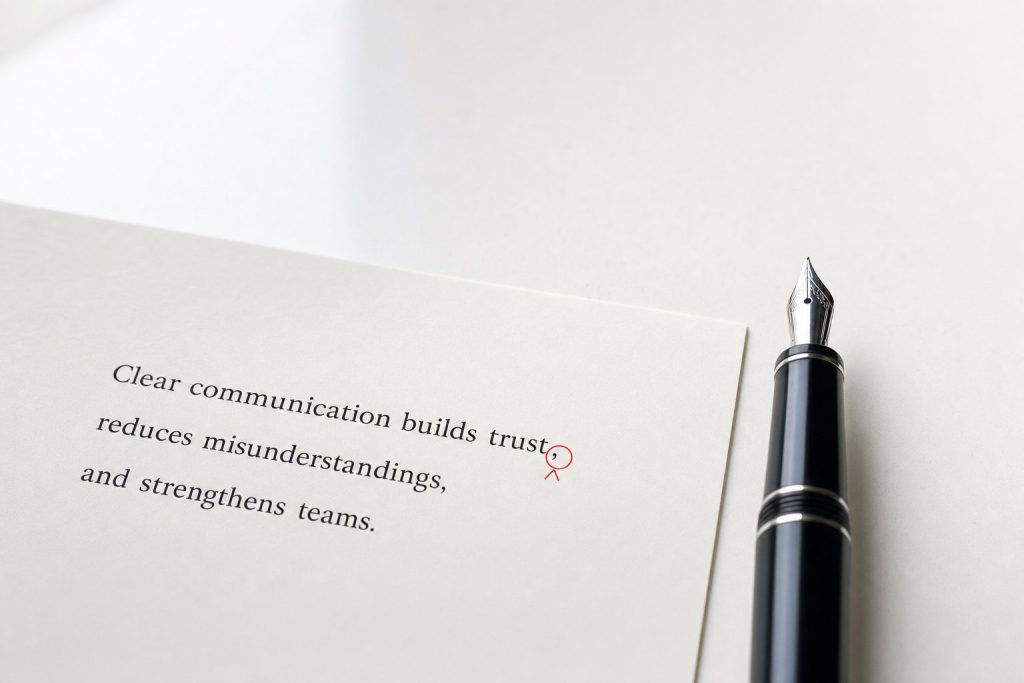
Precise grammar is a core skill for anyone communicating at work. Its impact is often underestimated, including in Top Entrepreneurial Skills that depend on clear, reliable messaging. Strong professional communication skills, whether in leadership or daily tasks, rely heavily on your ability to write accurately and avoid ambiguity. Colleagues depend on emails, summaries, and chats that are unambiguous and convey a consistent tone. Mastery of grammar precision supports both individual reputations and collective organizational effectiveness.
Understanding grammar precision in workplace settings
Grammar precision in the workplace means more than avoiding obvious mistakes. It requires using correct sentence structure, maintaining consistent tense, and making sure pronouns and references are clear. The goal is to reduce opportunities for misunderstanding during high-stakes exchanges.
Workplace writing often exposes the risks of “good enough” grammar. Under time constraints, rushed messages leave room for ambiguity and error. When stakes are high, even a minor grammatical slip can create confusion about responsibilities or next steps.
Clarity and credibility in daily communication
When you write professional messages, sentence structure directly impacts how your intentions are understood. An unclear reference or misplaced phrase in an email can lead to duplicated work or missed action items. Consistent grammar demonstrates attention to detail and earns the trust of readers.
It is possible to craft clear, professional communication without sounding stiff or overly formal. Choosing familiar vocabulary and correct verb forms helps establish credibility without distancing your audience. Workplace readers appreciate messages that balance precision with accessibility.
Where small errors become major communication risks
Certain grammar mistakes are known to cause disproportionate problems. Ambiguous modifiers, unclear pronouns, and omitted context can spark confusion about who is responsible or what action is needed. Small punctuation errors, such as misplaced commas, can alter the intended meaning.
Inconsistent tense usage can cause confusion in fast-paced projects, particularly around timelines and responsibilities. This issue can disrupt workflow and cause cascading errors, especially when multiple teams collaborate on the same tasks.
Accountability and clear outcomes with precise language
Assigning ownership clearly requires direct subject-verb combinations and specific nouns. Vague references, such as “they will handle it,” leave room for misunderstandings. Delegation and reporting benefit from unambiguous sentence structures.
Using the right modal verbs and tone allows you to distinguish between requests, commitments, and updates. “Could you send the report?” differs from “Please send the report by Thursday.” This distinction helps prevent tasks from being overlooked or deadlines from slipping past unnoticed.
Developing reliable grammar precision habits
Building precision starts with practical editing routines. Quickly reviewing workplace messages for the basics can catch most ambiguous phrases. Separating ideas into short sentences further improves clarity in situations with higher stakes.
Rereading communication aloud and considering the recipient’s perspective help identify hidden ambiguities, including those that can affect decision-making and Leadership Skills in day-to-day workplace communication. Consistency in capitalization, terminology, and formatting across emails and documents signals professionalism and prevents confusion as projects evolve.