A yard fence works best when it is planned around the way a property is actually used. Before comparing colors, styles, or materials, consider what the fence must accomplish each day: creating privacy, containing pets, defining space, improving access control, or protecting a pool area. A chain link fence in Cincinnati Ohio, for example, may be a practical choice where visibility and pet containment matter more than complete screening.
The strongest fence plans account for the whole site, not just the perimeter. A backyard may need privacy near a patio, a secure run for a dog, a wide gate for lawn equipment, and a separate barrier around water. Thinking through those needs before installation can help prevent inconvenient gate locations, drainage problems, and costly changes later.
Start With the Fence’s Main Purpose
Define the primary purpose before selecting a fence design. A fence intended to keep a dog in the yard may need secure openings near the ground, while a privacy fence may need closely spaced boards or panels. A front-yard boundary may benefit from openness and visibility, while a backyard gathering area may call for more screening. One property can reasonably use different fence styles and heights in different areas.
Review the Property Before Choosing a Layout
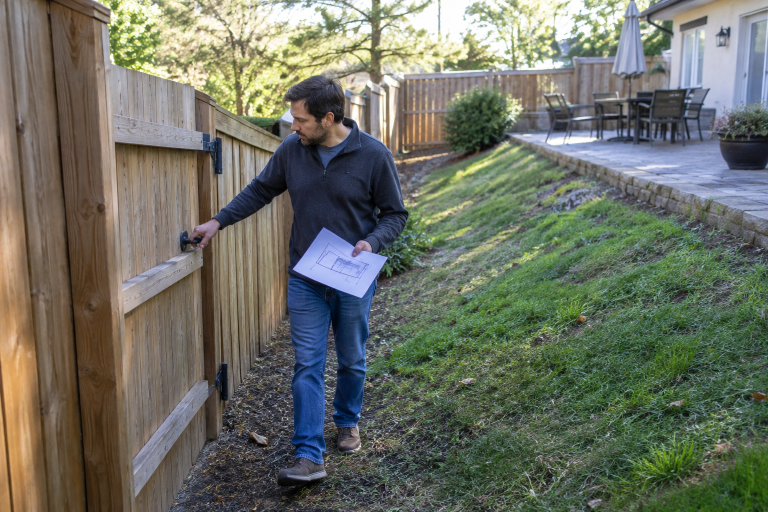
Walk the proposed fence line before ordering materials or scheduling work. Look for slopes, mature trees, roots, retaining walls, sheds, patios, utility equipment, driveways, and narrow access points. Note soft soil, standing water, and signs of erosion. A simple sketch showing structures, proposed gates, known boundaries, utilities, and runoff routes can make planning discussions much clearer. A basic site drainage map can also help homeowners think through how water moves across uneven ground.
Choose a Practical Fence Height
Fence height affects privacy, visibility, cost, and the overall appearance of the property. Taller is not always more useful. Near a driveway, sidewalk, or street corner, a tall, solid fence can reduce sightlines for people walking or driving. Grade changes also matter because a fence can appear substantially taller from one side of a slope than the other. Choose height by area and purpose, then confirm whether local rules, HOA standards, pool requirements, or corner-lot visibility rules apply.
Plan Gates Around Daily Movement
Gates deserve the same attention as the fence itself. Consider who and what needs to pass through them: people, trash bins, bicycles, wheelbarrows, lawn mowers, furniture, service crews, or vehicles. A pedestrian gate may work well near the house, while a wider gate may be needed where equipment enters the yard. Check swing direction, latch placement, ground clearance, and whether the opening will remain usable after landscaping changes. Planning for occasional future access is often easier than enlarging a gate later.
Account for Children and Pets
Containment depends on more than fence height. Small pets may fit through openings that look minor from a distance, and determined animals may dig, climb, jump, or push against weak sections. Inspect the planned design for gaps at the bottom, loose corners, excessive spacing, and objects near the fence that could serve as climbing aids.
Quick containment checklist
- Check gate latches, hinges, and self-closing action where appropriate.
- Look for gaps below panels and around uneven ground.
- Make sure corners and connections are firmly secured.
- Move storage items, furniture, or wood piles away from climbable sections.
Add Extra Care Around Pools and Water
A general yard fence may not satisfy pool-barrier requirements. Pool safety requires a barrier designed to separate the water area from the home and the rest of the yard. The CDC advises that home pools have a four-sided fence at least four feet high, with a self-closing, self-latching gate, as part of a broader approach to preventing drowning. Review the current home pool fencing guidance and confirm the specific rules that apply to the property’s location before construction begins.
Protect Drainage Paths and Soil Stability
A fence can create problems when it crosses a swale, ditch, drainage easement, or area that regularly carries runoff. Water that becomes trapped can contribute to washout, erosion, and movement around posts. If possible, inspect the intended fence route after a heavy rain to identify water paths that are not obvious in dry weather. Keep drainage features accessible, and use extra care when installing solid sections in exposed areas where wind or moving water may add pressure.
Check Property Lines, Easements, and Local Rules
An older fence is not always located on the true property line. When boundaries are uncertain, review a survey, plat, or other reliable property record before setting posts. Also identify utility and drainage easements, public rights of way, and any shared-fence considerations. Ask the local planning office or HOA about permits, approved locations, height limits, materials, and gate rules. HOA approval does not necessarily replace a required government permit.
Match the Fence Material to the Site
Material selection should reflect the site’s conditions and the desired level of openness. Open designs can preserve views and airflow. Semi-private designs can soften views while allowing some air movement. Solid fences provide more screening but may require additional planning in windy locations. Consider moisture exposure, soil conditions, slope, maintenance needs, and the cost of repairs over time, not only the initial price.
Build a Simple Maintenance Plan
Inspect a fence at least twice a year and after severe weather, flooding, nearby construction, or major landscaping work. Check posts, rails, panels, or mesh, fasteners, hinges, and latches. Address leaning posts, sagging gates, rust, loose hardware, and ground gaps early.
- Spring: Check for winter damage and soil movement.
- Summer: Trim vegetation away from the fence line.
- Fall: Clear leaves and debris from drainage areas.
- Winter: Watch for gate binding, frost movement, and storm damage.
Common Fence Planning Mistakes
- Choosing a style before identifying the fence’s main job.
- Installing gates that are too narrow or poorly placed for equipment access.
- Assuming existing fences mark legal boundaries.
- Ignoring slopes, runoff, utilities, or easements.
- Assuming a perimeter fence automatically meets pool-safety requirements.
- Comparing estimates only by linear footage without reviewing gates, removal, site preparation, and difficult access.
Questions to Ask Before Installation
- What problem should the fence solve first?
- Which areas need privacy, visibility, or containment?
- Where should people, vehicles, pets, and equipment enter?
- Are there utilities, easements, drainage routes, or unclear boundaries?
- Will local rules affect the height, placement, or design?
- Will the fence still work if household needs change?
- What upkeep will the selected material require?
- What work is included in the written estimate?
Conclusion
A well-planned yard fence should fit the property and support everyday life for years to come. Start with purpose, then consider layout, gates, safety, drainage, property rules, materials, and maintenance. Taking those steps before installation helps create a fence that is practical, secure, and easier to manage over time.