
Strict environmental regulations force industrial facilities to deploy flue gas recirculation to suppress thermal nitrogen oxide emissions. However, routing inert exhaust gases back into the combustion air stream introduces notable thermodynamic efficiency trade-offs.
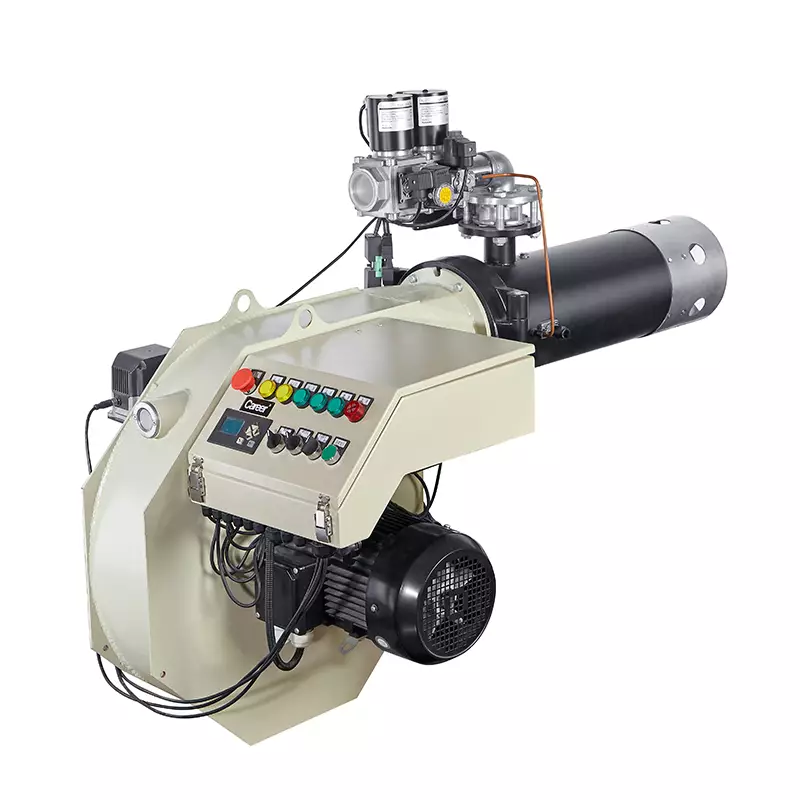
Plant engineers must weigh environmental compliance gains against the hidden fuel penalties and electrical parasitic loads associated with FGR systems. Understanding these trade-offs ensures that industrial installations maintain optimal fuel economy while meeting stringent regional air quality standards across heavy manufacturing cycles.
Mechanics of Flue Gas Recirculation in Low-NOx Systems
Flue gas recirculation works by diverting a portion of cooled exhaust gases back into the primary combustion air intake duct. This inert gas mixture dilutes the oxygen concentration and increases the heat capacity of the incoming reactant stream.
Deploying an advanced ultra low NOx burner requires precise FGR ducting to achieve uniform mixing and suppress peak flame temperatures. Lowering local flame temperatures effectively prevents thermal nitrogen oxide formation without requiring excessive excess air levels that degrade combustion stability.
Fluid dynamic modeling proves that mixing cooled exhaust products with fresh combustion air alters the overall density and momentum of the jet. Technicians must calibrate variable-position dampers to maintain steady mass flow rates despite the changing viscosity of the recirculated stream.
Proper aerodynamic design prevents localized flow separation and ensures consistent oxygen distribution across the burner throat during continuous modulation cycles.
Thermal Ballast Effect and Flame Temperature Suppression
Reintroduced flue gas acts as a heavy thermal ballast, absorbing a significant share of the energy released during initial fuel oxidation. Because carbon dioxide and water vapor possess high specific heat capacities, they absorb radiant thermal energy away from the reaction zone.
When utilizing a specialized ultra low nox gas burner, this intentional temperature suppression cuts thermal NOx formation by up to eighty percent safely. However, this suppression also reduces peak radiant heat flux inside the primary combustion chamber, altering overall heat distribution profiles across furnace walls.
Lower flame temperatures reduce radiative heat transfer efficiency, forcing the boiler to rely more heavily on convective heat absorption downstream. This shift requires careful monitoring of furnace exit gas temperatures to prevent overheating in secondary tube bundles.
Maintaining optimal flame envelope geometry compensates for the reduced radiant intensity without compromising the structural integrity of the refractory lining.
Impacts on Convective Heat Transfer and Boiler Efficiency
Massive volumes of recirculated exhaust gas increase total mass flow rates moving across convective heat transfer sections inside the boiler vessel. Higher gas velocities reduce flue gas residence time, degrading convective heat recovery efficiency and elevating stack gas exit temperatures noticeably.
Facilities often experience higher fuel consumption rates because additional thermal energy is lost directly through the exhaust stack during peak loads. Engineering teams must balance recirculation rates carefully to prevent these convective penalties from undermining overall plant operational profitability.
Quantifying these thermal efficiency penalties involves tracking continuous stack gas temperatures alongside fuel-to-steam conversion ratios across daily production shifts. Unchecked recirculation volume inflates dry gas stack losses, eroding the baseline performance gains achieved by modern heat exchangers.
Proactive tuning ensures that FGR rates remain strictly bounded within levels that satisfy environmental limits without triggering excessive fuel penalties.
Electrical Power Penalties of High-Volume Recirculation Fans
Handling large volumes of hot, abrasive flue gas requires dedicated external blowers driven by high-capacity electric motors operating under harsh conditions. These auxiliary FGR fans consume substantial electrical energy, increasing parasitic plant loads and inflating monthly utility expenditures significantly across continuous operations.
Modern monoblock architecture engineered by Career Burner helps streamline duct resistance and minimize fan motor power requirements. Optimizing external recirculation pathways prevents auxiliary electrical consumption from offsetting the fuel savings achieved by the primary thermal unit.
Equipping auxiliary FGR blowers with variable-frequency drives mitigates parasitic power draws during partial-load operations by matching fan speed to real-time demand. Industrial facilities avoid the massive energy waste associated with throttling mechanical dampers against constant-speed motors.
Intelligent motor control preserves electrical infrastructure capacity and lowers peak demand charges imposed by regional utility providers.
Balancing Emissions and Efficiency with Advanced Burner Design
Achieving ultra-low emissions without sacrificing thermal efficiency demands sophisticated electronic control loops that dynamically modulate FGR dampers in real time. Microprocessor-based controllers optimize recirculation percentages based on active firing loads and continuous stack gas oxygen analysis.
Equipment specialists at Career Burner integrate precision air-fuel ratio modulation to keep thermal efficiency penalties to an absolute minimum. This technological precision allows industrial facilities to comply with environmental mandates without suffering from chronic energy waste.
Digital control platforms eliminate manual tuning drift by executing multi-point characterization curves tailored to specific fuel and draft parameters. Automated oxygen trim loops compensate for atmospheric shifts and fuel heating value variations instantly, ensuring stable combustion stoichiometry.
Modern facilities rely on this software-driven precision to balance stringent environmental compliance with maximum industrial thermal output.
Optimizing Thermal Performance Through Integrated FGR Management
Flue gas recirculation remains an indispensable tool for achieving stringent environmental compliance across modern industrial manufacturing operations worldwide. While FGR introduces notable thermodynamic and electrical efficiency trade-offs, advanced engineering mitigates these penalties effectively.
Partnering with elite innovators like Career Burner ensures that industrial heating assets achieve pristine environmental performance. Implementing smart control strategies guarantees long-term energy reliability and sustainable operational profitability across heavy manufacturing sectors.