
Touring productions place unusual demands on display equipment because the same cabinets may travel between venues, pass through different loading areas, and be assembled under tight schedules. Weight becomes part of the operational equation rather than a specification that matters only during installation.
In stage LED screen rental, lighter structures can affect how crews plan transport, handling, lifting, and storage. YES TECH has incorporated carbon fiber into its MAir design as one response to these practical demands, but the broader lesson is about how material selection can influence the entire rental cycle.
Why Strength-to-Weight Ratio Matters
Carbon fiber attracts attention in rental applications because its value is not simply low weight. The more useful engineering question concerns how much structural capability can be achieved relative to the mass being moved. A material that provides rigidity without adding unnecessary bulk can influence handling procedures, supporting structures, and the physical workload placed on technicians.
This distinction becomes especially relevant to transparent LED screen rental, where large cabinets can create considerable handling requirements. Rental equipment may be lifted repeatedly, positioned precisely, packed after shows, and transported again shortly afterward. Reducing cabinet mass does not remove the need for proper handling, but it can change how much physical effort each stage requires.
Material selection also affects how designers think about structural members around the display. Instead of evaluating a frame solely by its appearance or thickness, engineering teams can consider stiffness, mass distribution, connection points, and how the cabinet behaves during repeated movement.
Reduce Weight Across the Touring Cycle
The financial value of lighter equipment is not limited to transportation. Every cabinet passes through several stages: warehouse preparation, loading, unloading, positioning, installation, dismantling, and repacking. A small difference repeated across hundreds of cabinets can influence the workload at every point.
That makes stage LED screen rental different from a permanent installation. Rental inventory needs to move frequently, sometimes through venues with limited loading access or short setup windows. Fewer handling difficulties can give crews more flexibility when the production schedule changes, while compact logistics can make better use of available transport and storage capacity.
Transport planning should still consider cabinet dimensions, dolly design, packaging, road restrictions, and venue access. Weight is one variable within that calculation, not a substitute for proper logistics planning. The strongest benefit comes when material choices work together with packaging and movement procedures.
Carbon Fiber in the MAir Design
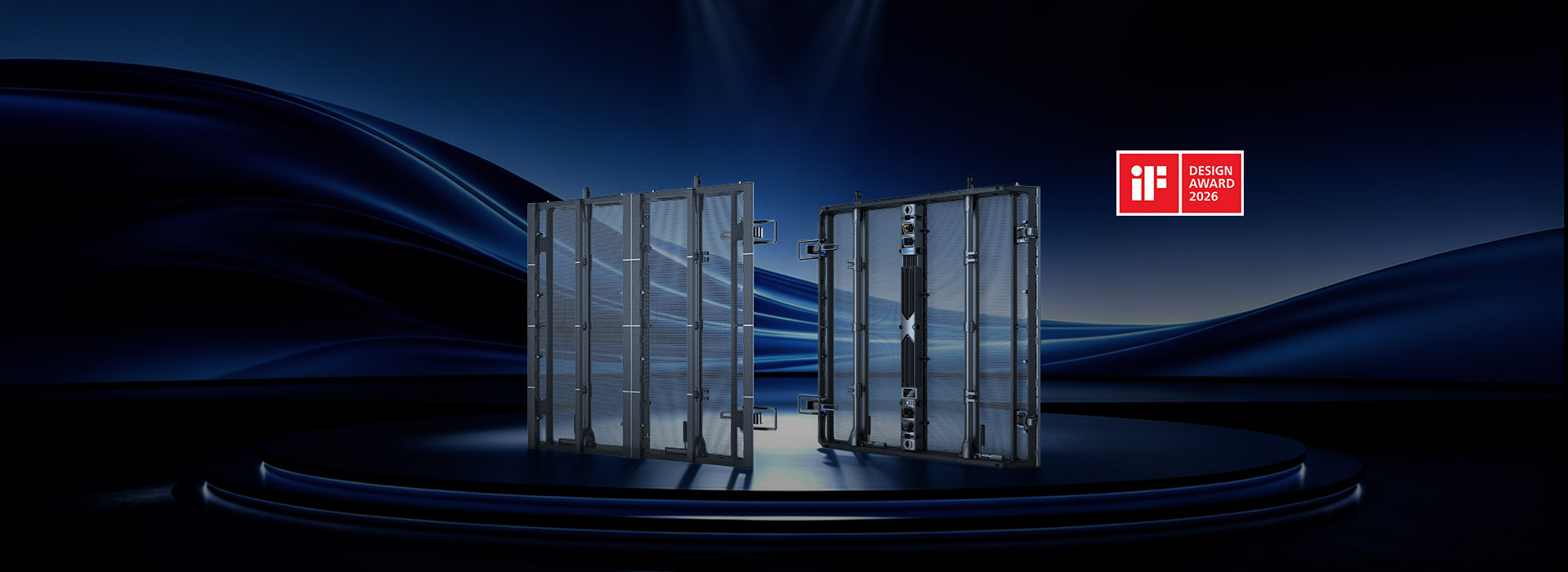
The MAir Series provides a concrete example of this material approach. Its cabinet uses a seamless one-piece carbon fiber molded frame with central metal support rods, and the published specification lists a 19 kg cabinet weight. YES TECH states that the design is 23.2% lighter per square meter than conventional transparent LED cabinets while maintaining structural strength. The platform is 1000 × 1000 × 102 mm and is available in P5.95 and P7.81 configurations.
Those figures matter because the effect of lower mass becomes more meaningful when the display is repeatedly moved. A lighter cabinet can be easier to carry and position, while its structural design still needs to accommodate the demands of touring. The carbon fiber frame is thus better understood as part of a wider equipment architecture rather than an isolated material upgrade.
For rental operators, the useful evaluation point is whether the material choice fits the entire workflow. Cabinet weight, frame rigidity, connection design, transport equipment, and installation methods should be assessed together before the equipment enters a busy touring schedule.
Consider Hanging Loads and Site Handling
Suspended LED structures require more than a simple calculation of screen weight. Rigging plans may also involve supporting beams, motors, cables, safety components, wind conditions, and the geometry of the display itself. Reducing the mass of the cabinets can influence the overall suspended load, although the final rigging calculation must always account for the full installation rather than the LED cabinets alone.
In transparent LED screen rental, this distinction becomes particularly important when large surfaces are hung above stages. The MAir platform is designed for large-scale touring and has published hanging capability up to 25 meters in outdoor applications, alongside an air-frame configuration designed for strong wind conditions.
Site handling presents another consideration. Cabinets often move through narrow backstage routes, temporary platforms, elevators, ramps, and loading docks before reaching their final position. A lighter cabinet can make these transitions less demanding, but technicians still need controlled lifting methods, appropriate protective equipment, and clear communication between rigging and video teams.
Conclusion
Carbon fiber matters in rental LED design because touring equipment has to work before the show even begins. Its usefulness can be seen in the relationship between cabinet mass, structural performance, handling effort, transportation, and suspended installation rather than in the material name alone. When these factors are considered together, the design of a display becomes closely connected to the realities faced by rental crews.
For transparent LED screen rental operators, that perspective can make equipment evaluation more practical. Weight should be examined alongside frame construction, transport capacity, rigging requirements, connection methods, and expected deployment frequency. YES TECH’s MAir design illustrates how a carbon fiber structure can become part of that broader engineering strategy, offering rental teams a useful reference when assessing how display materials affect the demands of touring work.