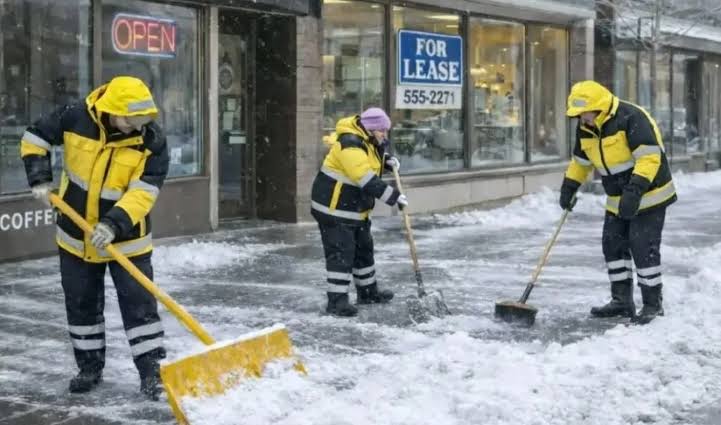
Clearing a snowy walkway is easy to underestimate. The problem is rarely the first pass itself; it is the repeated backtracking that happens when snow is pushed into the wrong area, a narrow section is missed, or the operator has to cross an already-cleared path to reach the next section.
A well-planned route can make snow removal faster, less tiring, and more consistent. Whether you use a shovel or an electric snow blower, the basic principle is the same: decide where snow will go before deciding where you will move.
Start by Mapping the Walkway Before Clearing Any Snow
The most efficient snow-clearing routine begins with a quick assessment.
Look at the full route from the house to the driveway, sidewalk, garage, mailbox, or other destination. Identify corners, gates, steps, narrow sections, drainage areas, and locations where snow cannot simply be thrown or pushed.
This matters because snow removal is partly a logistics problem. A walkway may be only 40 feet long, but if it changes direction several times, the operator can spend almost as much time repositioning as clearing.
Identify Where the Snow Has Somewhere to Go
Before starting, choose appropriate discharge or piling areas.
Avoid creating piles where they block:
- Drainage paths
- Garage doors
- Driveway entrances
- Sidewalk access
- Visibility near intersections
- Gates or outdoor equipment
When using a snow blower, pay particular attention to discharge direction. Snow thrown across a cleared walkway often creates another pass that could have been avoided with a better initial route.
Choose a Clearing Direction That Minimizes Backtracking
There is no single route that works for every property, but a useful strategy is to work from the least accessible end toward the area with the most available snow-storage space.
For example, if a narrow walkway connects a back door to a driveway, start at the back and work toward the driveway. This keeps removed snow moving away from the remaining work area instead of repeatedly crossing already-cleared sections.
For wider walkways, work in overlapping lanes rather than randomly moving from one side to another.
The objective is simple: each pass should move you closer to the final exit point.
Match Your Equipment to the Walkway’s Width and Snow Depth
Equipment selection affects how efficiently a route can be cleared.
A compact snow blower may be easier to maneuver on narrow paths, around landscaping, and through gates. A larger machine can cover more width per pass but may be cumbersome in tight spaces.
Snow depth also matters. Fresh, light snow generally behaves differently from wet, compacted snow or snow that has been partially frozen and refrozen.
When evaluating an electric snow blower, consider the manufacturer’s stated clearing width, intake height, recommended operating conditions, and discharge capabilities rather than assuming a larger machine is always more efficient.
Think About the Whole Route, Not Just Clearing Width
A machine that clears a wider strip per pass may still require more repositioning if it cannot maneuver comfortably around corners.
For a walkway with several tight turns, maneuverability can be more valuable than maximum clearing width. For a long, straight path, coverage per pass becomes more important.
The best equipment is the one that fits the geometry of the property.
Clear the Most Difficult Sections Before They Become Compacted
Timing can have a surprisingly large effect on effort.
Fresh snow is generally easier to move than snow that has been compressed by foot traffic or exposed to repeated freeze-thaw cycles. If a walkway is likely to receive regular foot traffic, clearing it before a thick layer becomes compacted can reduce the need for scraping later.
This is especially important around steps, slopes, and narrow entrances where repeated walking naturally packs snow down.
Watch for the Transition From Snow to Ice
Snow removal and ice management are related but different tasks.
A clean-looking walkway can still be slippery if a thin layer of snow has compacted into ice. After clearing, inspect shaded areas, steps, and low spots where melting and refreezing are likely.
The National Weather Service recommends caution around snow and ice hazards and provides winter weather safety guidance for walking and traveling in hazardous conditions. National Weather Service Winter Safety
Use Overlapping Passes Instead of Leaving Narrow Strips
Trying to make every pass exactly adjacent to the previous one often creates thin strips of snow between lanes.
A slight overlap is usually more efficient.
The amount of overlap depends on the equipment and snow conditions. Rather than measuring it precisely, watch the edge of the previous cleared lane and allow the machine to remove a small portion of that boundary on the next pass.
This is particularly useful after heavier snowfall, when uneven accumulation can make the edge of each pass less predictable.
Control Snow Discharge Before It Becomes a Problem
A snow blower can clear a walkway quickly, but discharge direction determines whether the work stays efficient.
Before beginning, decide which side of the walkway can safely receive the snow. Adjust the chute accordingly and maintain a consistent direction whenever practical.
Avoid sending snow toward:
- Previously cleared walkways
- Doorways
- Vehicles
- Windows
- Neighboring properties
- Areas where pedestrians may pass
Changing discharge direction repeatedly can also make the route harder to plan.
Use a Different Strategy for Steps and Narrow Sections
Steps require a different approach from open walkways.
Large snow blowers may not be appropriate for stairs. A shovel or smaller clearing tool can provide better control in these areas.
Likewise, narrow paths between landscaping features may require shorter passes rather than trying to force a large machine through the space.
Think of the property as a series of connected zones:
- Open walkway
- Narrow passage
- Steps
- Entrance area
- Driveway or sidewalk connection
Choose the most practical method for each zone rather than insisting on one tool everywhere.
Compare Common Snow-Clearing Approaches Before Starting
Different conditions favor different techniques.
| Situation | Practical approach | Why |
| Light snow on narrow path | Compact blower or shovel | Easy maneuverability |
| Heavy snow on long walkway | Snow blower | Reduces repeated lifting and pushing |
| Steps | Shovel or suitable manual tool | Better control |
| Wet, heavy snow | Appropriate powered equipment within specifications | More efficient material handling |
| Packed snow | Scraping may be required | Blowing alone may not remove compacted layers |
| Complex walkway layout | Zone-by-zone approach | Reduces repositioning |
The mistake is assuming that one method must handle every part of the property.
Keep the Clearing Route Free of Obstacles
Before operating powered snow equipment, remove objects that could interfere with the machine or become hidden under snow.
Garden hoses, toys, decorations, newspapers, extension cords, and loose branches can become difficult to see once covered.
Also inspect the walkway for uneven surfaces, raised edges, drainage covers, and other features that may affect equipment movement.
The Occupational Safety and Health Administration provides winter weather guidance emphasizing awareness of cold-weather hazards, slips, falls, and changing outdoor conditions. OSHA Winter Weather Safety Resources
Avoid These Snow Removal Planning Mistakes
Repeated passes often result from a few predictable habits.
Starting in the middle of the route can force you to cross cleared areas repeatedly.
Throwing snow toward the remaining work area creates extra cleanup.
Ignoring walkway width can make equipment selection unnecessarily difficult.
Clearing only the visible surface may leave compacted layers that become hazardous later.
Waiting until foot traffic has heavily packed the snow can dramatically increase the effort required.
A few minutes of planning before the first pass can prevent many of these problems.
Use a Simple No-Backtracking Snow Removal Routine
For a typical residential walkway, try this sequence:
- Walk the entire route before starting.
- Choose snow-storage areas for each section.
- Identify narrow areas and steps that require a different tool.
- Select the starting point that minimizes crossing cleared sections.
- Set the discharge direction before beginning.
- Work in overlapping lanes on wider paths.
- Move continuously toward the final exit point.
- Inspect the finished walkway for packed snow or ice.
This creates a repeatable system rather than turning each snowfall into an improvised job.
Frequently Asked Questions About Efficient Snow Removal
What is the best direction to clear a walkway?
Usually, begin at the least accessible end and work toward the area where snow can be stored most easily. The ideal direction depends on the property’s layout and available discharge areas.
How can I prevent repeated snow-blower passes?
Plan the discharge direction, use overlapping lanes, avoid throwing snow back onto cleared sections, and choose a route that minimizes repositioning.
Is a wider snow blower always faster?
Not necessarily. A wider machine may cover more ground per pass, but a compact machine can be faster overall on narrow or highly segmented walkways because it requires less maneuvering.
Should I clear snow before people walk on the walkway?
When practical, yes. Foot traffic can compress fresh snow and make later removal more difficult, particularly when temperatures fluctuate around freezing.
Can a snow blower remove ice?
Snow blowers are primarily designed for snow. Hardened ice or heavily compacted layers may require a different removal method, and equipment should always be used within the manufacturer’s stated limits.
Efficient Snow Removal Starts With Route Planning
The most effective snow removal is rarely about making the machine work harder. It is about reducing unnecessary movement.
Map the walkway, decide where snow can safely go, select equipment that fits the route, and work in a direction that keeps you moving forward. Use overlapping passes, clear difficult sections before they become compacted, and treat steps and narrow areas separately.
Once that routine becomes familiar, snow removal becomes much more predictable. Instead of repeatedly clearing the same sections, you can approach the walkway as a planned route one pass at a time, with each pass serving a clear purpose.