
Heat becomes an engineering constraint long before electronic components reach their visible limits. Rising ambient temperatures can reduce thermal headroom, accelerate component aging, and affect the operating margin of variable frequency drives. Choosing a high power density inverter therefore requires attention not only to electrical output but also to enclosure design, airflow, installation clearance, and site conditions. FRECON develops variable frequency drive products for industrial applications, including equipment designed around demanding speed and torque-control requirements.
Why High Ambient Temperature Changes Inverter Design
Electronic components dissipate heat during normal operation, and variable frequency drives are no exception. Power semiconductors, capacitors, magnetic components, and internal control circuits all contribute to the thermal load inside an enclosure.
Hot climates make heat removal more difficult because the temperature difference between the equipment and surrounding air becomes smaller. Natural convection consequently becomes less effective, while poorly ventilated cabinets can accumulate heat even when the surrounding room appears reasonably cool.
Humidity and dust can add another layer of complexity. Outdoor industrial sites may expose electrical cabinets to particles, moisture, or corrosive substances. Protection measures should therefore reflect the actual environment rather than relying solely on the inverter’s nominal power rating.
Managing Airflow And Cabinet Layout
Cabinet design has a direct influence on inverter temperature. Adequate clearance around ventilation paths allows heated air to move away from power components, while blocked intake or exhaust areas can restrict circulation.
Heat-producing components should be positioned with thermal behavior in mind. Placing multiple drives close together may increase local temperature, especially when several units operate under substantial load. Separation and airflow planning can help distribute heat more effectively.
External cooling systems may become necessary in particularly demanding installations. Depending on the site, engineers may consider forced-air ventilation, cabinet air conditioning, heat exchangers, or other thermal-management methods. The appropriate choice depends on ambient temperature, enclosure construction, equipment losses, and contamination risks.
Connecting Cooling With Drive Loading
Thermal performance cannot be separated from operating conditions. An inverter running continuously near its rated output produces a different heat profile from one operating intermittently with frequent periods of reduced load.
Motor characteristics also influence the situation. High starting torque, low-speed operation, frequent acceleration, and heavy-duty cycles can increase thermal stress. Engineers should examine actual duty cycles rather than judging cooling requirements from motor power alone.
Derating may become relevant as ambient temperature rises. Manufacturers commonly specify operating limits and derating curves that show how allowable output changes under elevated temperatures. These values should be checked directly in the relevant technical documentation before final installation.
FRECON FR30 Series And Thermal Considerations
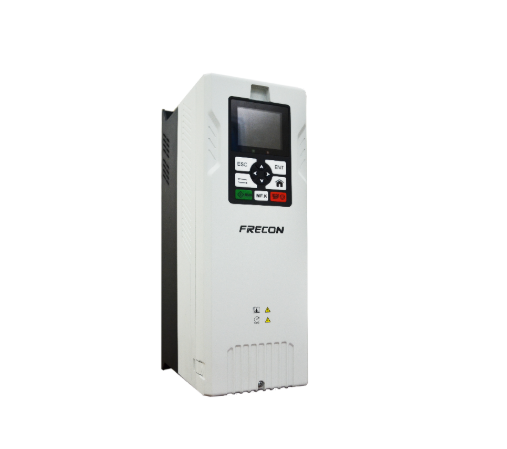
FRECON describes the FR30 Series as a high-performance variable frequency drive with high power density and a full-featured design positioned for mid-to-high-end industrial applications. Its supplied specifications highlight built-in VC, SVVC, and VF control modes, with applications requiring accurate speed control, rapid torque response, and strong low-frequency output characteristics.
Such a design illustrates why thermal planning needs to accompany electrical selection. Higher power density can allow more output capability within a smaller physical footprint, but cabinet designers still need to account for heat generation, ventilation, clearance, and ambient temperature. The actual installation method should follow the model-specific technical documentation and environmental requirements.
Practical Cooling Methods For Industrial Sites
Forced ventilation is often considered where natural airflow cannot remove enough heat. Fans can move hot air away from the enclosure, although filters may be needed in dusty environments and fan condition should form part of routine maintenance.
Cabinet cooling becomes more important when outside air itself is too hot. Air-conditioning or heat-exchanger systems can separate internal electronics from contaminated external air, but they add energy consumption, cost, and additional maintenance requirements.
Temperature monitoring offers another practical safeguard. Sensors placed inside cabinets can reveal gradual thermal changes before they become obvious through drive alarms. Combining temperature information with load, current, and operating-time data gives maintenance personnel a clearer picture of actual equipment conditions.
Conclusion
Thermal management is an integral part of industrial inverter selection, particularly in regions where high ambient temperatures persist for long periods. Equipment spacing, cabinet airflow, duty cycles, environmental protection, and manufacturer derating information all influence the final cooling strategy.
Selecting a high performance inverter should therefore involve more than comparing torque or speed-control features. Electrical capability and thermal behavior need to be assessed together, especially when machinery operates continuously or experiences demanding acceleration and low-frequency conditions.
For installations built around a high power density inverter, compact dimensions can provide valuable cabinet flexibility, but the available thermal headroom must remain part of the design calculation. FRECON’s FR30 Series demonstrates how high power density and advanced control functions can be combined for industrial applications, while effective cooling still depends on installation conditions and correctly applied engineering practices. A high performance inverter can perform better in hot environments when its electrical characteristics, cabinet design, and thermal-management approach are considered as one system.