Digital dentistry is changing how dental clinics manage impressions, treatment planning, and restorative workflows. A dental model 3D printer allows clinics to produce physical dental models from digital scans, helping streamline communication, improve workflow consistency, and reduce reliance on traditional model fabrication methods. However, successful integration requires more than purchasing equipment. Clinics must consider digital workflows, material compatibility, staff training, production capacity, and long-term operating costs.
For dental practices looking to improve in house production, SHINING 3D DENTAL provides digital dentistry solutions designed to support the transition from digital data to physical dental models.
Identify Where 3D Printing Fits Into the Clinical Workflow
Before introducing a dental model 3D printer, clinics should identify which procedures would benefit most from in house model production. Common applications include orthodontic models, restorative case planning, clear aligner workflows, and the fabrication of physical models for laboratory communication.
The first step is to establish a reliable digital process. Intraoral scanners capture patient data, after which the digital files can be prepared using compatible dental software. Once the model is ready for printing, the clinic can move from digital design to physical production without relying entirely on an external laboratory.
This approach can help reduce unnecessary handoffs and give dental teams greater control over scheduling. Clinics should evaluate their current case volume and turnaround requirements to determine whether in house printing is practical for their daily operations.
Choose a Dental Clinic 3D Printer Based on Practical Needs
Selecting a dental clinic 3D printer involves more than comparing advertised resolution or printing speed. The right system should match the clinic’s clinical applications, production volume, available workspace, and staff capabilities.
For example, a clinic that regularly produces orthodontic models may prioritize consistent dimensional accuracy and efficient batch production. A practice with a broader range of restorative cases may also need to consider software compatibility, supported materials, and the ability to manage different model designs.
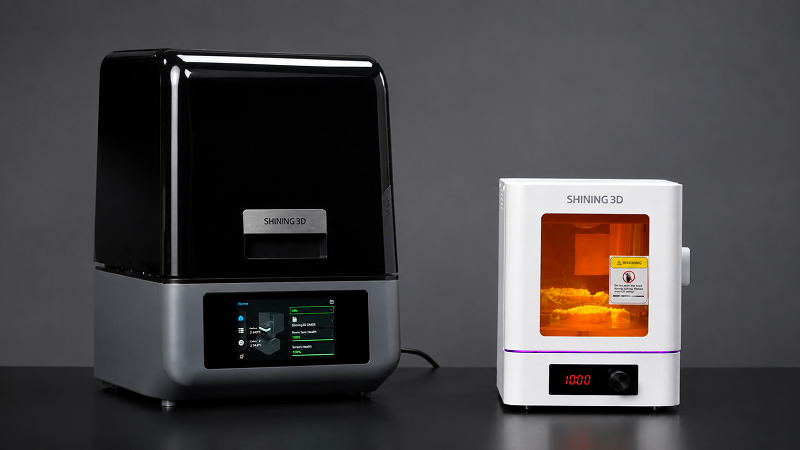
SHINING 3D DENTAL offers the AccuFab Aris solution for dental 3D printing. When evaluating this system, clinics should review its specifications, supported applications, material requirements, and workflow compatibility to determine how well it fits their existing digital setup.
Ease of operation is another important consideration. A system that fits naturally into established clinical routines can reduce the learning curve and make it easier for staff to adopt digital production.
Establish a Standardized Digital Production Process
A repeatable workflow is essential for integrating 3D printing into daily clinic operations. Without clear procedures, printing can introduce additional tasks rather than improve efficiency.
Clinics should define each stage, from scan acquisition and digital model preparation to print setup, post processing, and final quality inspection. Staff should understand who is responsible for each step and how files are named, stored, and retrieved.
Material handling and post processing also require attention. Dental resins must be used according to the manufacturer’s instructions, including the specified washing and curing procedures where applicable. Appropriate ventilation, personal protective equipment, and safe waste disposal should be incorporated into the clinic’s operating procedures.
Standardization helps reduce avoidable errors, supports consistent output, and makes production easier to manage as case volumes increase.
Train Staff and Monitor Printing Performance
Even a well selected dental model 3D printer requires trained operators. Dental assistants, technicians, and other responsible team members should understand basic file preparation, printer operation, material management, routine maintenance, and troubleshooting.
Clinics can begin with a limited number of recurring applications before expanding into more complex workflows. During this stage, teams should monitor print success rates, production time, material consumption, and the frequency of reprints.
These indicators provide a practical basis for evaluating whether in house printing is meeting operational expectations. They can also reveal where additional training, revised print settings, or changes to scheduling may be needed.
Evaluate the Total Cost of Ownership
The financial value of a dental clinic 3D printer depends on more than its initial purchase price. Clinics should account for printing materials, cleaning supplies, curing equipment where required, maintenance, staff time, software, and equipment downtime.
Comparing these expenses with current laboratory costs can help practices estimate the potential return on investment. Case volume is particularly important. Clinics with frequent model production may benefit more from in house printing than practices that only need physical models occasionally.
It is also useful to assess turnaround time and workflow flexibility. Even when direct cost savings are modest, having greater control over model production may help clinics coordinate appointments and manage urgent cases more effectively.
Build a Scalable Digital Dentistry Workflow
Integrating a dental model 3D printer is most effective when it supports a clearly defined clinical and operational objective. By selecting suitable applications, standardizing production, training staff, and monitoring costs, clinics can make informed decisions about expanding in house manufacturing.
With solutions such as AccuFab Aris, SHINING 3D DENTAL supports dental professionals exploring digital production workflows. The goal is to establish a dependable process that fits existing clinical needs while providing room for future growth in digital dentistry.