
Modern consumer displays combine multiple engineering disciplines to produce vivid picture fidelity. Flat-panel engineering has shifted from standard edge-lit panels toward dense, multi-zoned illumination architectures.
Bringing together millions of picture elements alongside microscopic backlights creates an intricate balance between light generation and light control across the viewing surface.
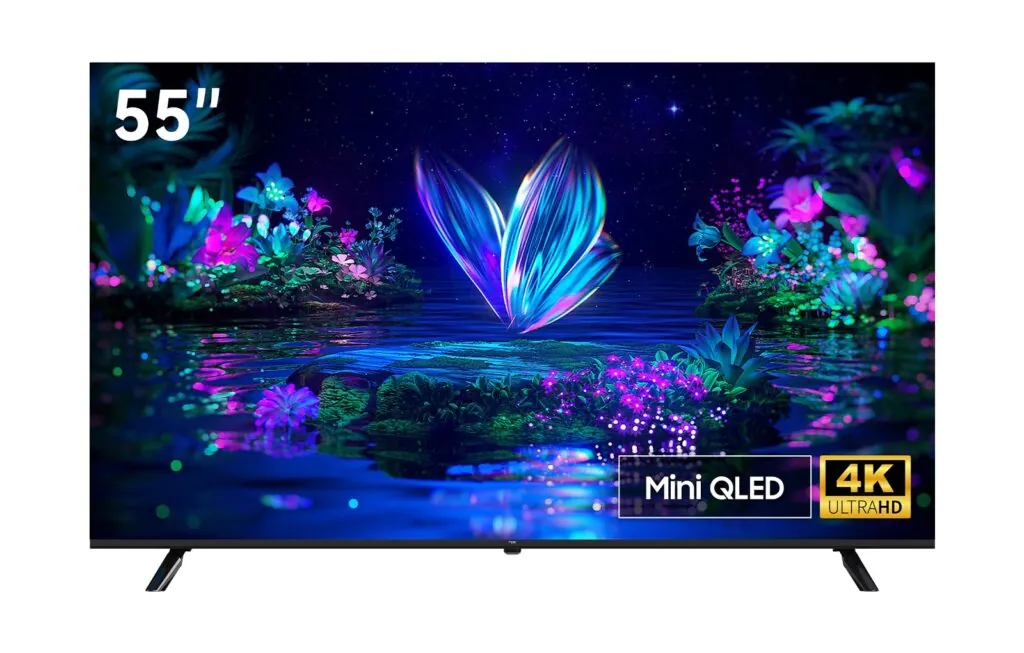
Evaluating a modern 4K Mini LED TV requires examining how four core parameters interact across the visual pipeline. Resolution, dimming zone density, high dynamic range processing, and luminance capacity do not function as isolated features. Deficits in one area compromise the performance of the others, making holistic hardware evaluation essential for commercial buyers.
Hardware procurement teams and home theater enthusiasts frequently navigate competing technical claims regarding contrast ratios and nit ratings. Examining the optical mechanics connecting silicon controllers, diode grids, and liquid crystal matrices clarifies how these integrated systems operate under demanding viewing conditions. Systematic analysis reveals why balanced engineering determines practical picture quality.
Ultra High Definition: Pixel Density and Spatial Rendering
Display clarity originates from spatial resolution defined by a grid of 3840 horizontal and 2160 vertical pixels. Approximately 8.3 million picture elements populate the liquid crystal substrate. Dense pixel allocation maintains sharp character outlines, detailed textures, and fine background elements even at close viewing distances across commercial installations.
Individual sub-pixels modulate light passing through red, green, and blue optical color filters. Driving millions of sub-pixel circuits demands high-bandwidth timing controllers to prevent spatial misalignment, chromatic aberration, or signal lag. Tight pixel spacing prevents visible screen-door artifacts across expansive screen sizes spanning 55 to 85 inches in diagonal measurement.
Scaling lower-resolution content relies on real-time computational interpolation within the primary processor. Bilinear and neural algorithms assess adjacent pixel neighborhoods, predicting intermediate edge gradients without creating ringing noise. Clean spatial upscaling provides the structural canvas required for complex lighting arrays to operate effectively across varied media feeds.
Miniaturized Backlight Arrays and Local Dimming Mechanics
Solid-state backlights replace bulky conventional light-emitting diodes with miniaturized semiconductor dies measuring less than 300 micrometers. Reducing diode dimensions allows engineers to pack thousands of individual emitters across the rear chassis plane. Distributing emitters evenly produces consistent baseline illumination across the panel surface while keeping structural cabinet depth remarkably slim.
Partitioning thousands of micro-diodes into discrete local dimming zones establishes localized contrast control. Dedicated driver integrated circuits regulate electrical current across separate zone clusters based on real-time video scene content. Darkening zones behind night skies while illuminating adjacent stars preserves contrast without washing out shadow details or compromising peak highlights.
Mitigating optical blooming requires sophisticated algorithms coordinated with liquid crystal transition speeds. Light bleeding across zone boundaries occurs when high-intensity highlights sit against deep shadows. Responsive zone tracking adjusts edge boundaries dynamically, suppressing halo artifacts around white subtitles and high-contrast graphical elements during cinematic viewing.
Luminance Thresholds: Specular Highlights and Sustained Brightness
Luminance capability defines how intensely a display punches through ambient room reflections while rendering specular highlights. Measured in candelas per square meter or nits, brightness potential ranges from standard 600-nit operational baselines to peak bursts exceeding 1000 or 1500 nits on advanced panels deployed in sunlit environments.
Sustained brightness levels differ substantially from momentary peak burst capabilities. Small window tests measuring five to ten percent of total screen area demonstrate peak capability for explosions or reflective metallic glints. Full-field luminance demands robust thermal dissipation to prevent excessive diode junction heat from degrading semiconductor life and shifting chromatic balance.
High-output backlights maintain saturated colors across bright scenes rather than washing out into pastel shades. Supplying ample photometric headroom allows a 4K Mini LED TV to recreate natural outdoor sunlight, reflections on water surfaces, and intense atmospheric effects with lifelike visual presence and stable color volume.
High Dynamic Range: Contrast Ratios and Electro-Optical Transfer
Expanded dynamic range bridges panel brightness limits with cinematic mastering intentions. High dynamic range signals carry metadata specifying absolute luminance values according to perceptual quantization curves. Translating these non-linear light codes requires synchronized cooperation between the backlight array and the liquid crystal shutter plane across every frame.
Static and dynamic HDR formats dictate whether tone mapping adjustments remain fixed or adapt scene by scene. Standard HDR10 applies uniform metadata across an entire video title, whereas dynamic profiles evaluate light parameters on individual frames. Frame-accurate processing prevents highlight clipping in bright scenes and preserves shadow gradations in dark interiors.
Panel tone mapping translates high-mastering signals down to the physical capabilities of the display hardware. Sophisticated algorithms roll off highlight luminance smoothly rather than abruptly truncating bright data points. Preserving gradations in clouds or bright flames maintains visual depth across high-contrast broadcast, streaming, and gaming content without causing perceptual posterization.
Commercial Display Manufacturing and Integration
Procuring commercial-grade screens requires balancing optical performance with manufacturing reliability and system firmware. Deploying an enterprise-ready 4K Mini LED TV demands strict panel binning, uniform optical bonding, and responsive timing control boards capable of driving high refresh rates alongside low input latency for versatile display installations.
Established in 2005, NPC manufactures advanced commercial displays, smart televisions, and visual hardware for partners across international markets. Their production operations encompass high-efficiency Mini LED backlights, open-cell optical calibration, and authorized integration with licensed operating platforms including Samsung Tizen OS and LG webOS Hub.
Commercial distributors and brands can consult with NPC to evaluate customized display tooling, bulk production timelines, and hardware specifications. Connect with the technical engineering team at NPC to review volume order minimums, private-label packaging options, and tailored OEM product configurations.