You brought your pet in for help, maybe for a blockage, a ruptured intestine, a foreign body, or another emergency, and now you are hearing words like sepsis, abdominal infection, intensive monitoring, and guarded prognosis. That shift is hard. One moment you are focused on surgery, the next you are trying to understand why recovery suddenly depends on oxygen support, blood pressure checks, pain control, and round the clock nursing. While topics like pet vaccinations in Hamilton, ON are part of routine preventive care, your focus right now is on helping your pet through this critical recovery period.
Septic peritonitis in pets is one of those conditions that turns fast. Infection leaks into the abdomen, the body reacts hard, and treatment rarely ends when the incision is closed. Surgery removes the source when possible, but survival often depends on what happens right after, during critical care, and over the next several days. That is the connection owners usually do not see coming.
Septic peritonitis in pets becomes a whole body emergency
Septic peritonitis happens when bacteria contaminate the abdominal cavity. In dogs and cats, this often starts with gastrointestinal leakage, a ruptured organ, a penetrating wound, or a breakdown at a surgical site. Once bacteria and inflammatory fluid spread through the abdomen, the body can move into shock, organ dysfunction, low blood pressure, clotting problems, and severe pain.
This is why surgery and intensive care are tied so closely together. Surgery can repair a perforation, remove dead tissue, flush contamination, and place drains when needed. It cannot instantly reverse sepsis. Your pet may still need aggressive fluids, antibiotics, temperature support, nutrition planning, bloodwork checks, and close watching for changes that happen hour by hour.
Research in veterinary medicine has looked closely at outcomes and treatment patterns in dogs and cats with septic peritonitis. One study on dogs with septic peritonitis highlights how serious this condition is and why timing, stabilization, and postoperative support matter. A related study on cats with septic peritonitis shows the same basic truth, even though feline cases can present differently and may be harder to recognize early.
Surgery is the first battle and critical care is the recovery fight
You may hear that the surgery went well, then feel confused when the team still sounds cautious. That caution is not mixed messaging. It reflects the reality of abdominal sepsis. A pet can survive anesthesia and still face a difficult next 24 to 72 hours because inflammation does not shut off the second the abdomen is cleaned and repaired.
If blood pressure stays low, the kidneys may struggle. If protein levels drop, swelling and poor healing can follow. If bacteria or toxins have already spread, the heart and lungs can be affected. Some pets need plasma, feeding support, repeat imaging, or another trip to surgery if leakage continues. That is why an animal hospital managing abdominal sepsis in dogs and cats needs both surgical skill and strong ICU level support.
There is also the emotional weight. Owners often have to make decisions fast, approve estimates that rise with each added day of hospitalization, and process updates that change from hopeful to uncertain and back again. That stress is real. Septic peritonitis is not a simple post op complication. It is a medical crisis layered on top of a surgical one.
Critical care after septic peritonitis surgery shapes survival
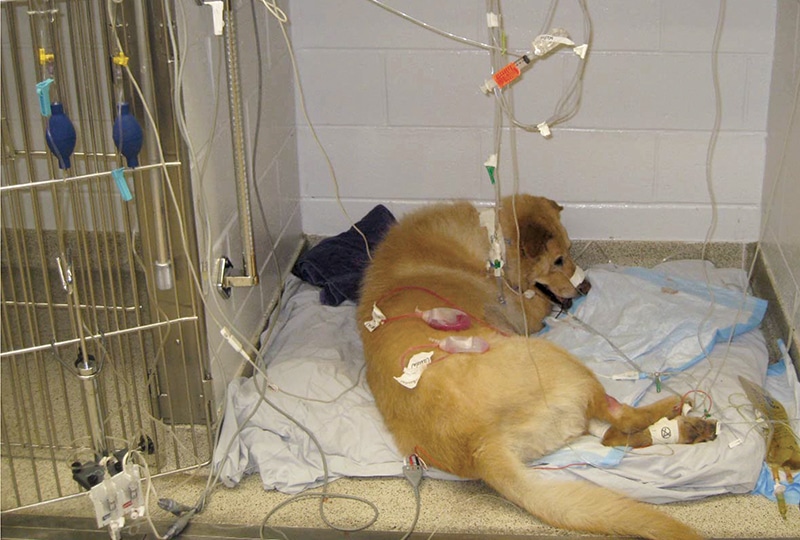
After surgery, the focus shifts from source control to stabilization and recovery. The care team watches heart rate, blood pressure, breathing, urine output, blood sugar, electrolytes, lactate, pain level, and abdominal comfort. They also track whether your pet is acting brighter or fading despite treatment. Small changes matter because they can signal improvement, persistent infection, or early organ trouble.
A veterinary review from the University of Missouri outlines how intensive monitoring and targeted support influence outcomes in septic abdominal disease. You can read that critical care overview here. The common thread is clear. Source control matters, but ongoing support is what gives the body a chance to recover from the inflammatory storm.
| Phase | Main Goal | What Your Pet May Need | What the Team Watches Closely |
|---|---|---|---|
| Before surgery | Stabilize shock and confirm the problem | IV fluids, pain relief, antibiotics, imaging, bloodwork | Blood pressure, temperature, hydration, lactate, organ values |
| During surgery | Control the source of contamination | Repair or remove damaged tissue, abdominal lavage, cultures, drains if needed | Anesthesia stability, contamination level, tissue viability |
| First 72 hours after surgery | Support organs and detect setbacks early | ICU nursing, repeat labs, oxygen, nutrition support, transfusion or plasma in select cases | Blood pressure, pain, urine output, electrolytes, glucose, signs of continued sepsis |
Septic abdomen treatment in pets depends on speed and follow through
Delay changes the picture. A pet that seemed only tired in the morning can be weak, cold, dehydrated, and unstable by evening. A pet that has just had abdominal surgery and suddenly becomes painful, vomits, acts dull, or develops a swollen belly needs attention fast. The earlier an animal hospital can assess and act, the better the chance of controlling both the abdominal infection and the body wide response.
This also explains why discharge can take time. Eating again, maintaining blood pressure without heavy support, improving lab values, and showing steady comfort are all signs your pet is moving in the right direction. Recovery is rarely linear. One good update does not always mean the danger has passed.
What you can do right now
Ask for the daily priorities. Get clear on the top three concerns for that day. It may be blood pressure, pain control, kidney values, appetite, or concern for ongoing leakage. That gives you a grounded way to follow progress instead of clinging to one number or one phrase.
Watch for changes after abdominal surgery. If your pet is already home, call right away for vomiting, marked lethargy, pale gums, belly swelling, refusal to eat, collapse, or worsening pain. In pet surgery and critical care, waiting to “see how the night goes” can cost valuable time.
Plan for the full course of care. Surgery is only one part of treatment. Ask about likely ICU time, recheck bloodwork, feeding plans, medications, and warning signs after discharge. That helps you prepare emotionally and financially for what recovery may actually involve.
If your pet is facing septic peritonitis, you do not need perfect answers right away. You need a team that can move quickly, explain clearly, and support your pet through both surgery and the critical hours that follow. If you are seeing signs of an abdominal emergency or your pet is struggling after surgery, contact an animal hospital immediately.