
Video creation was a time-consuming process involving a camera, editing software, time and location, and a fair bit of technical know-how. Now, thanks to AI, the process is more about idea generation than other elements. Dreamina made AI-powered video creation more accessible and spawned the creation of newer video-centric models. Seedance 2.0 and Seedance 2.5 are part of this revolution. They take advantage of the latest AI-centric video technologies to let creators imagine stories, scenes, and visual concepts without the need for traditional production methods.
Why Text-Based Video Creation Matters
Text is perhaps the most accessible way to communicate a visual idea to others, and in many cases, it is the most people will use to describe the video. Professional software editing is beyond most people and, if not a requirement, really slows the video creation process. As such, developers have built AI video models that rely on communication in text prompting. The creator writes the scene, and the video model automates the rest.
The Importance of Scene Details
An idea expands with small details in video production. The focal point and its surroundings, the placement of the camera, the movement, and the entirety of the tone need to all align. The small details are what set the tone and carry the idea in AI video production. Like, why not include the time and the location, the lighting, the action, and the perspective?
Seedance 2.0 and Short Video Content
There is a lot of short video content on the internet because of how quickly it can be made. Some short videos can be for entertainment, some can educate, some sell a product, some tell a story, and some can help create and develop a personal brand. It’s important to be able to make short videos as frequently as possible, but that can be nearly impossible for one person to accomplish. Creating short videos with AI can be very helpful to creators to get those ideas out.
It can accompany other content editing to help creators quickly develop a video content idea.
Exploring Stories Without a Full Production Team
Not everyone can have the best equipment and a full cast and crew to assist them in bringing an engaging idea to life. These scenarios are made even worse when people already have a great idea or a great story that they would like to share with the world. AI can help people see what their ideas will look like before they associate a lot of costs and effort with it.
Understanding More Complex Instructions
The ability to understand and perform a range of actions in a single scene is an important expectation of a more sophisticated model. Instructions may be given to have a character walk across a scene, pick up an object, and move to look through a window while leaving the scene. As a more complex prompt, situation, and context may be given. In addition, the model may be asked to perform a range of camera movements and lighting changes. For more sophisticated models, AI relies primarily on the context of the instructions.
Using AI Tools to Design Original Visual Ideas
One advantage of AI video generation is the ability to test a multitude of ideas. In traditional video production, changing a video concept may involve adjusting crew movement and scheduled productions. With AI, creators can rapidly test different ideas. It is even possible to test and compare multiple creative directions at once.
Technology Redefining Entertainment
AI video generation has many applications beyond entertaining the masses. Micro, small, and medium enterprises may use visuals generated by AI to develop value propositions and marketing campaigns. AI can also support the development of visual explanations of a product, service, or concept.
An AI Visual Can Help Form a New Idea
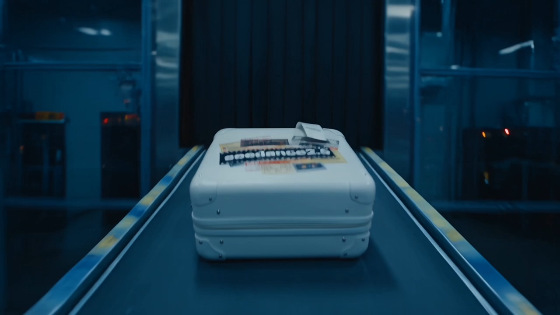
Too often, a product is shown on an empty white background, detracting from its potential. An AI video can help show how an idea can be presented to a potential customer using new environments. AI video can be used to develop new creative ideas for advertising and promotional campaigns.
AI Video Does Not Produce Stories
While the generation of video can be done with AI, it lacks the ability to communicate the message and ideas of the creators. The filmmaker is responsible for the story and the overall idea and direction of the creative possibilities of the project. AI has the potential to speed up the production process, but it does not deliver the quality of work.
Final Thoughts
Building Seedance 2.0 and Seedance 2.5 is a prime example of how quickly AI is advancing video prompt creation. Traditional video production techniques that required specific resources and a lot of time can be expedited with a creative description. Though traditional video creation is not going away, Seedance provides writers with another method of the video creation process.
The most valuable thing that prompt-generation AI provides is the ability to try out different ideas. A user is able to envision a sequence, create digital art to convey the idea, analyze the results, and improve upon the idea. With AI, there is no reason to rely on traditional means of development. For anyone from beginner to企业级, this offers a lot to explore.
FAQs
What is Seedance 2.0 used for?
Seedance 2.0 is an interface to help users generate video content from creative instructions. It helps users to easily put an idea into a visual scene and prototype different versions of the story/characters/world to help generate different variations of potential video concepts.
How does Seedance 2.5 help with the creative process?
Seedance 2.5 builds off the foundation of Seedance 2.0 and incorporates the latest advances in AI for compositing and semantic understanding for video generation.
Can AI tools (without advanced editing skills) assist someone in creating video content?
Yes, these tools simplify the video editing process for beginner users. All the user has to do is describe an idea, then refine the result with a few minor variations.
Can AI-generated content be used in Business videos?
AI technologies can assist businesses in creating promotional videos and marketing ideas. This can also assist in the creation of Product videos, etc.
Do I have to write a lengthy description?
Not always. Using a shorter prompt is helpful as long as it describes each element that the AI needs to understand the task, such as Subject, Action, Scene, Setting, Mood, and Camera Style.